Case study · Architecture
Every document
the practice needs,
ready to reuse.
How an independent architecture practice turned its weekly paperwork into templates in its own house style, then tested the whole chain on a fictional project, from the first meeting to the end of the warranty period.
Real case, anonymised: the practice is not named. The images show a fictional practice and project, created for the demonstration.
The
challenge.
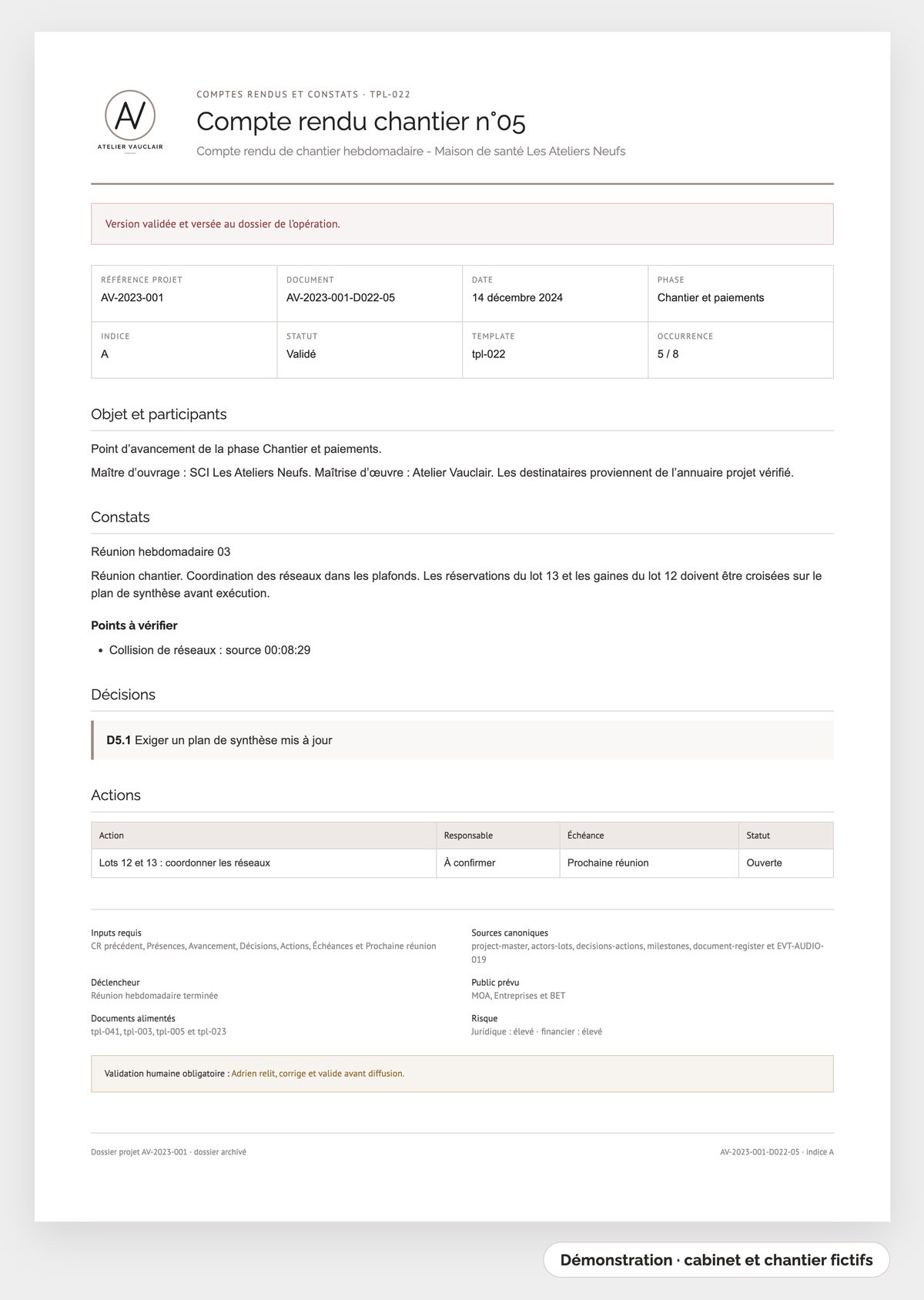
In an architecture practice, the same documents come back every week: site meeting reports, payment applications, fee invoices, emails to contractors and to the client.
Each one starts from the previous version, copied and edited. Copying mistakes slip through, and the client and contractors wait for their documents among dozens of emails.
Could the practice start from what it already produces, without changing how it works, so that every document is quick to reuse and goes to the right person?
How
it works.
The practice did not have to adopt any new software: everything starts from its own documents. The work was done with Codex, in five steps.
Find the recurring documents
AI agents go through the practice’s 14,471 work emails and their attachments to identify the documents it produces most often.
Turn them into templates
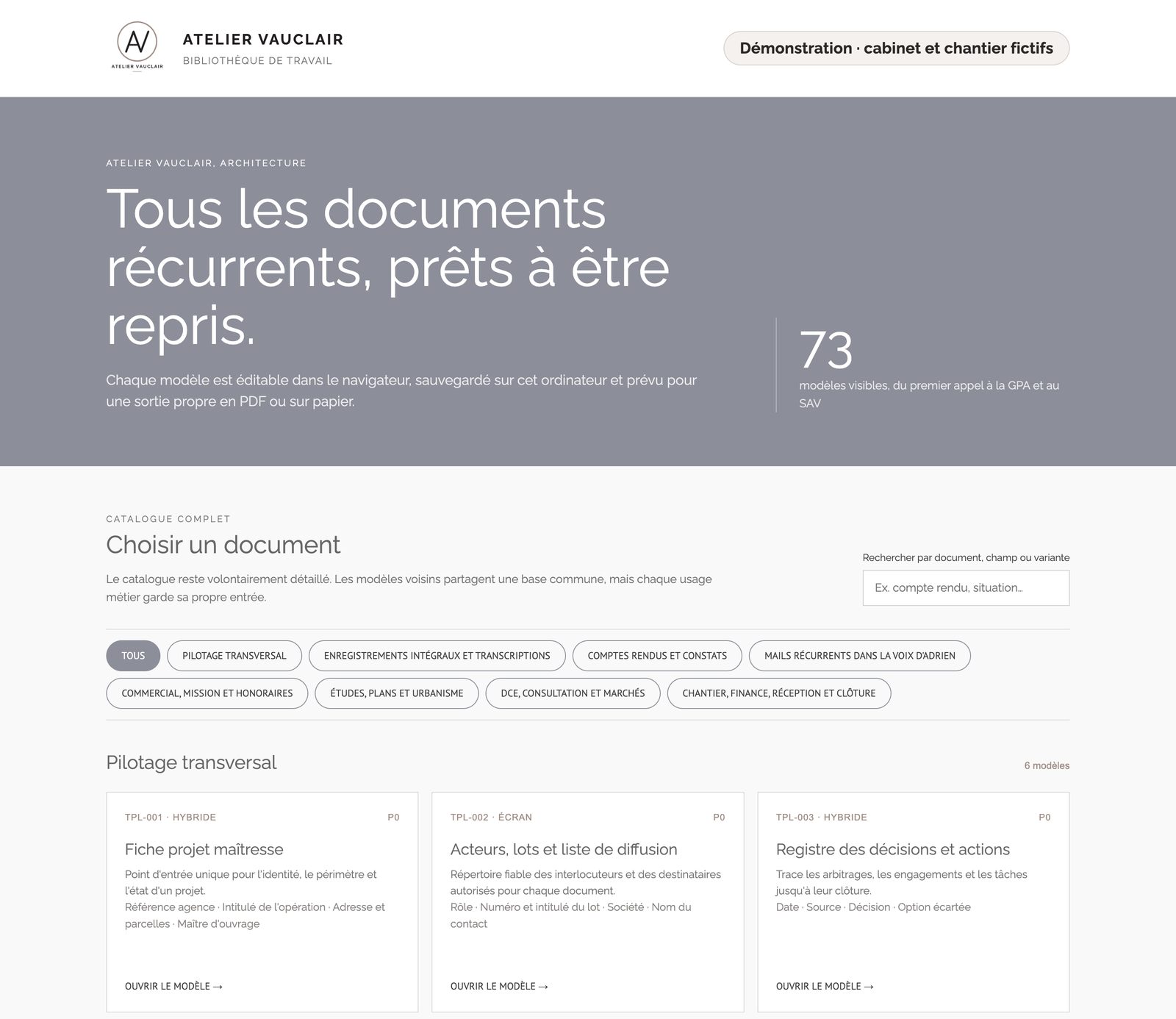
Each recurring document becomes a template in the practice’s house style: 73 templates in 8 families, from emails to site reports and handover. They can be filled in the browser and printed to PDF.
Test on a fictional project
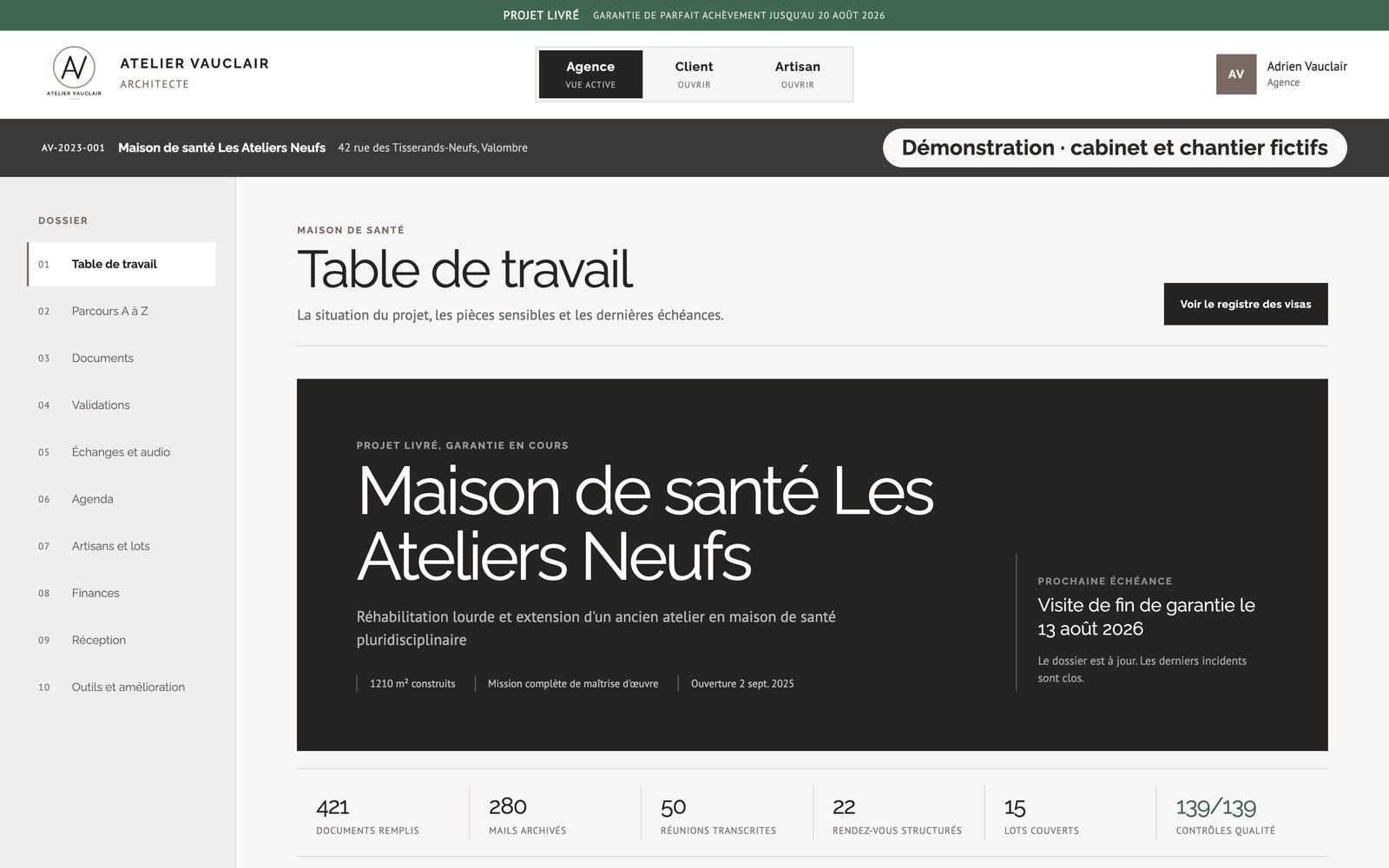
To test everything without exposing a real client, a fictional project is run from start to finish: 421 documents completed, 280 emails and 50 transcribed meetings, all simulated.
Give each person their own view
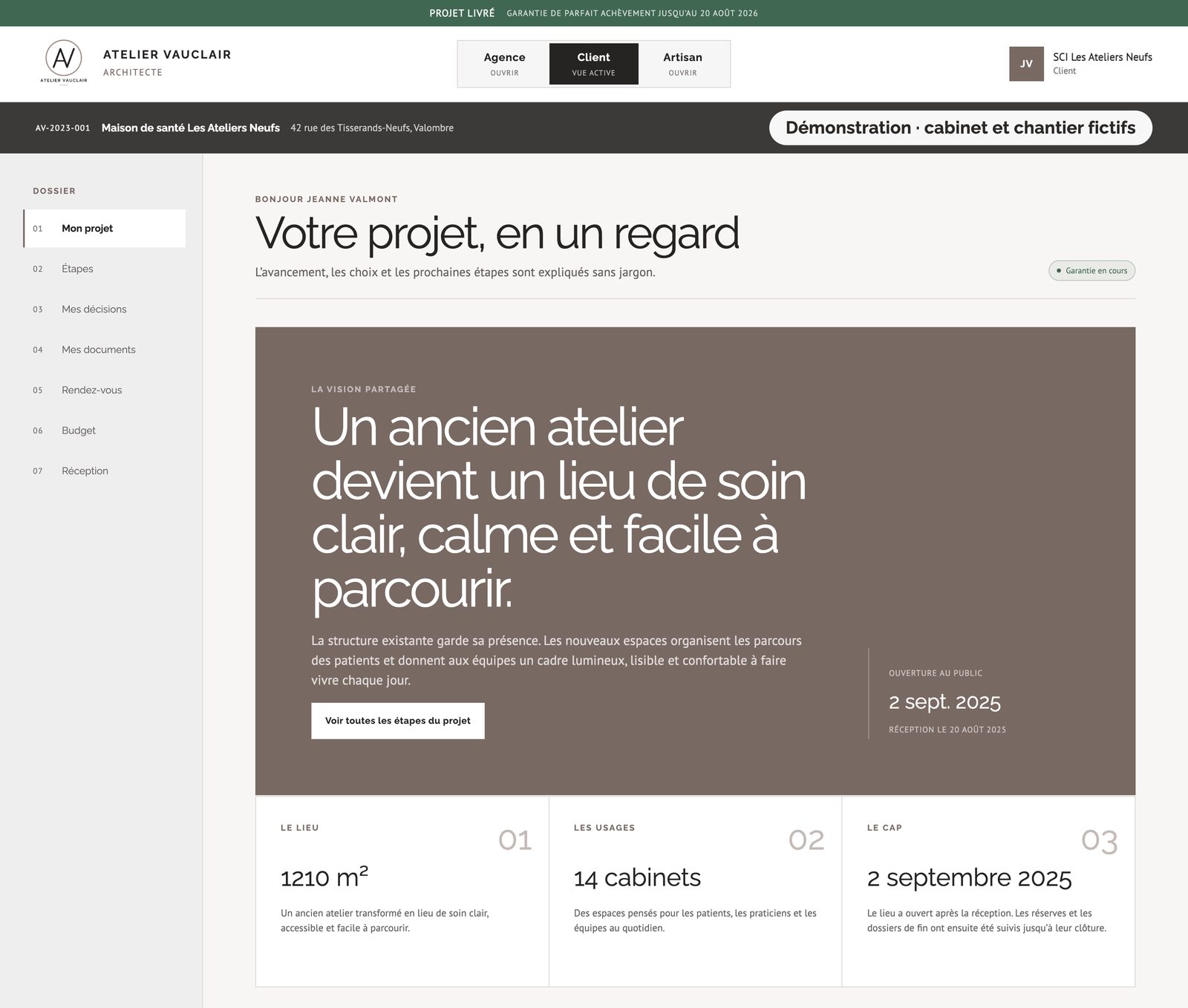
The same project file can be seen in three ways: the practice sees everything, the client sees their decisions, documents and appointments, and each contractor sees only their own work package.
Hand it over
A handover pack brings together the instructions and the templates, so the practice can carry on with AI on its own.
The
results.
- 73
- document templates in the practice’s house style
- 421
- documents produced on the test project
- 3
- views of the same project file: practice, client, contractor
A template does not replace the architect’s judgement: every document is checked before it is sent. The project space runs on the fictional project; connecting it to the practice’s real files is the next step.
The
project file.
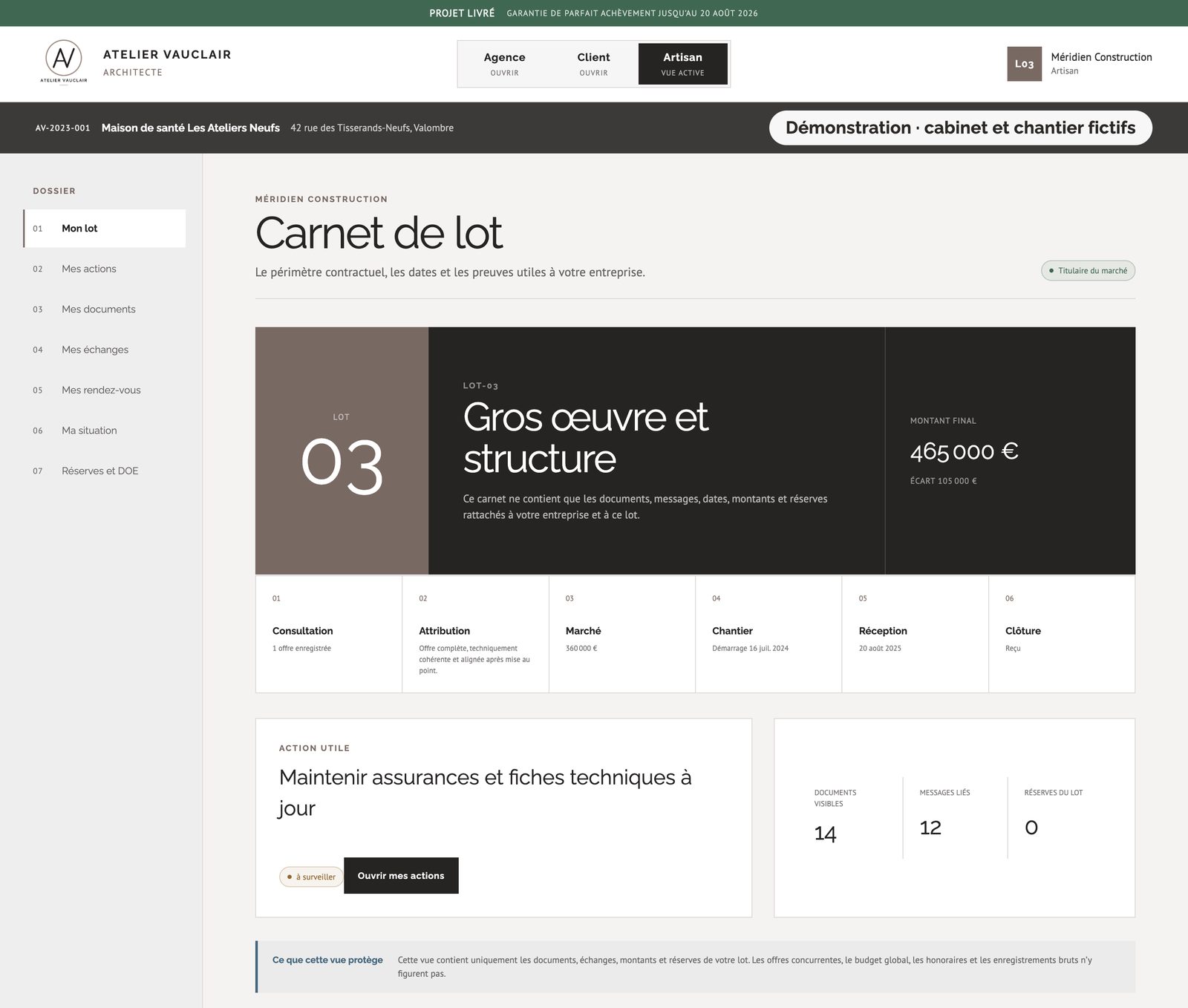
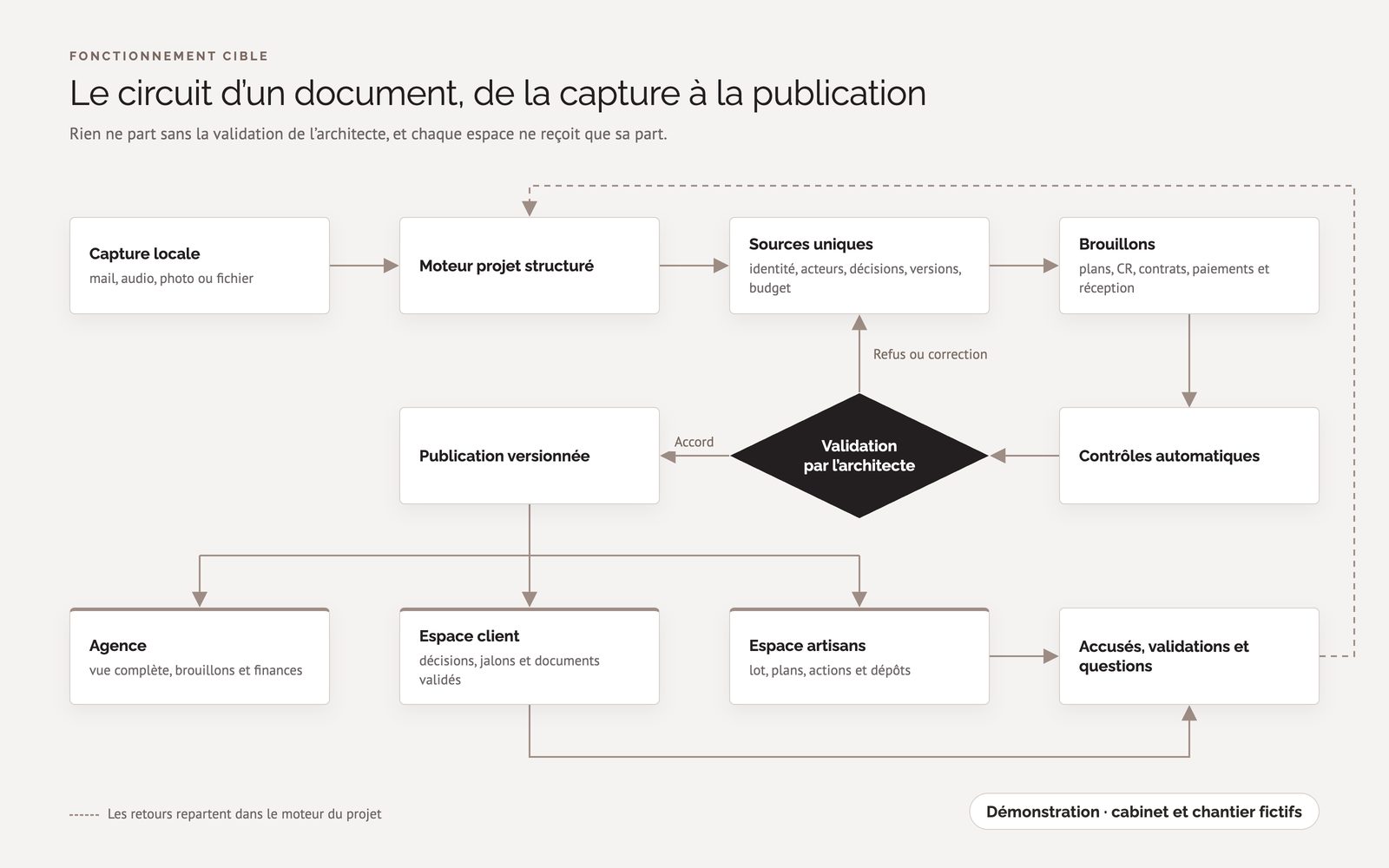
What you
could build.
The same approach works in any business where documents look much the same from one week to the next: construction, surveying, accounting, property management. We start from your own documents, then decide together what each person should see.
This is the kind of tool we can build together in our sessions, using a task from your business. You do the building, with me there to guide you.
Let’s talk about your business
Which documents take up too much of your time?
Tell me what keeps slowing you down. We’ll look for a practical starting point, whether that’s less admin, better follow-up with prospects or a smoother service for your customers.
Book a call to get started